After performing your best academically and making important decisions about your career and life, you finally reach a phase where you are required to face an interview. Some of you eagerly look forward to interviews, while many, or rather most, feel anxious and nervous just by hearing the word.
But have you ever wondered why interviews are so scary and why the majority of people fear them? The main reason is that many people are not aware of the effective skills required to perform well in an interview. There is also a common fear of public speaking or stage fear, which makes individuals anxious before facing interview panels. As the interview date approaches, especially if it is your first one, you may find yourself wondering how to face an interview confidently.
“How to face an interview” is a common question for everyone. An interview can be a life changing experience that can make or break your professional identity. Therefore, it is important to prepare yourself well in advance.
Listed below are some basic and essential tips and tricks that you should always keep in mind while preparing for and facing an interview. These tips will help you overcome job interview fear and interview anxiety, making you appear more confident, polished, and professional. They are especially useful for freshers as well as experienced candidates.
Suggested Read: Mastering Interviews: Before, during and After
Table of Contents
Toggle7 Tips to "How to face an interview successfully and Confidently"
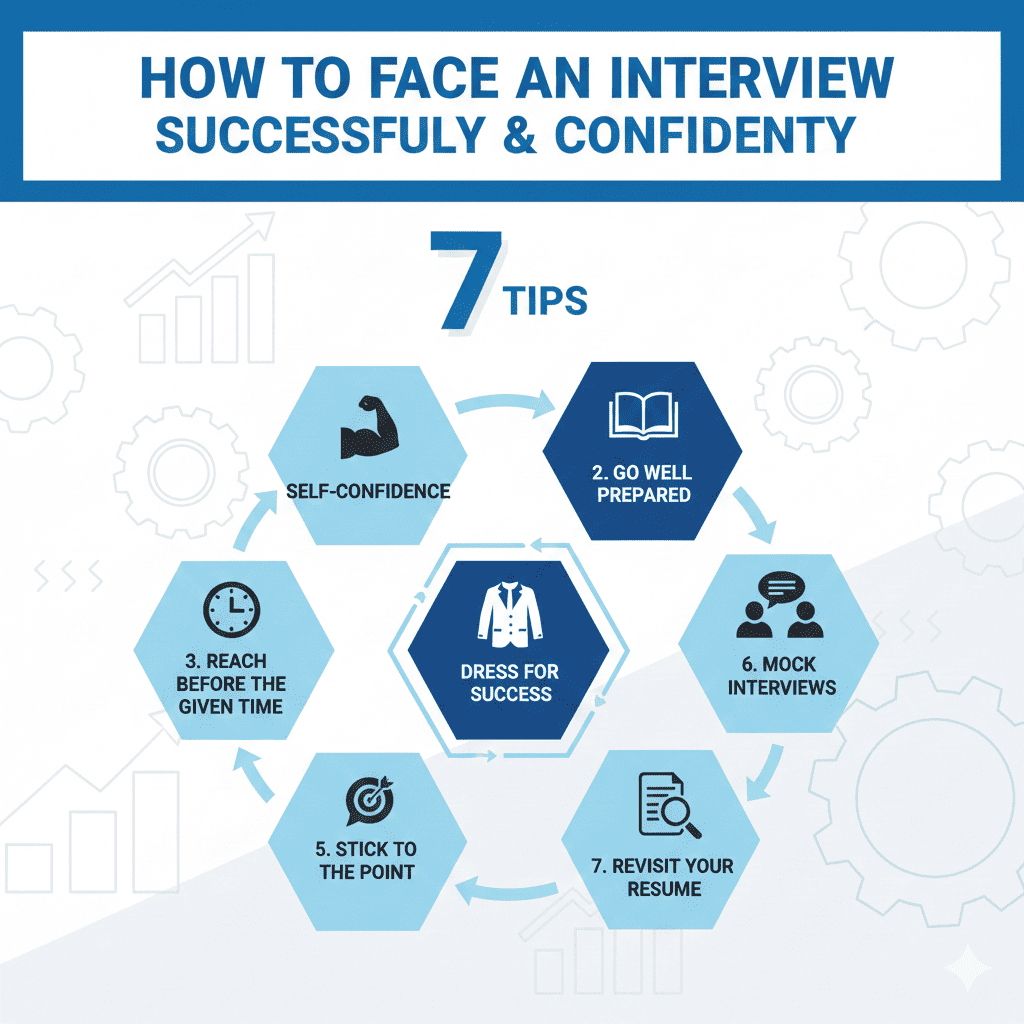
1. Self-Confidence:
The more honest you are during an interview, the easier it becomes to face it. Whatever questions you are asked, answer them confidently. If you do not know the answer to a particular question, politely admit it instead of guessing. Confidence often leaves a stronger impression than knowledge alone.
Own your personality and your achievements in front of the interviewer, as this forms your first impression. Do not shy away from who you are, and do not try to pretend to be someone else just to impress. Such behavior is easily noticed by interviewers and often results in a lack of confidence during the conversation.
Remember, a lack of confidence can significantly lower the overall impression you create during an interview.
2. Go Well Prepared:
Make sure to do thorough research at least a day or two before the interview. Gather basic information about the interviewer, the organization, and the role you are applying for, including what the job expectations are. This preparation will help reduce nervousness and give you a better idea of the types of questions that may be asked.
It is also important to familiarize yourself with common interview questions and mentally prepare rough answers in advance. Doing so will help you avoid going blank or struggling for words during the interview.
Additionally, stay informed about current events and developments related to your field. If such topics arise during the interview, your awareness and opinions can leave a strong impression, as they reflect your understanding, awareness, and thinking ability.
3. Reach Before The Given Time:
Suggested Read: How Early Should You be For an Interview
4. Dress For Success:
Know in detail, how to dress for an interview.
5. Stick To The Point:
6. Mock Interviews
7. Revisit Your Resume:
FAQs on How to Face an Interview
How do you face an interview confidently?
Facing an interview confidently requires preparation, clarity, and controlled body language. Research the company, understand your role, practice common questions, and focus on clear communication. Confidence improves when you know what to expect and present your experiences honestly and calmly.
What is the best way to prepare for an interview?
The best way to prepare for an interview is to research the company, review your resume, practice answers to common questions, and prepare thoughtful questions. Dressing professionally and arriving early also helps create a positive first impression.
What is a face-to-face interview?
A face-to-face interview is an in-person meeting between a candidate and an interviewer to assess skills, experience, and cultural fit. It allows employers to evaluate communication skills, body language, and overall professionalism more effectively than remote interviews.
How can freshers crack an interview?
Freshers can crack an interview by clearly explaining their academic projects, internships, and skills, while showing enthusiasm and willingness to learn. Practicing basic interview questions and demonstrating good communication skills are more important than having work experience.
Why do candidates fail interviews even when qualified?
Candidates often fail interviews due to poor communication, lack of preparation, or inability to explain their experience clearly. Nervousness, unclear answers, and not understanding the role can impact performance despite having the required qualifications.
What should you do during an interview to make a good impression?
During an interview, maintain eye contact, listen carefully, answer clearly, and show genuine interest in the role. Positive body language and thoughtful responses help interviewers assess confidence and cultural fit.
How long should interview answers be?
Interview answers should usually be 30–90 seconds long. This allows you to explain your point clearly without overexplaining. Structured answers help interviewers follow your thought process easily.
Many organizations use structured interview frameworks to assess candidate fit, communication skills, and role readiness as part of broader hiring processes. HR & Hiring: Global Workforce Strategy, Compliance, and Talent Management
Conclusion
Always remember, it’s just an interview and not a battlefield. The person on the other side of the desk is a human being too and understands well enough that your slight nervousness is normal during the interview. Using these tips subside your fear of interviews and attend all your interviews with confidence and grace. Your knowledge and smartness will be well complemented with your confidence and together they will fetch your dream job.
Recent Posts

Himani Joshi
Himani Joshi is a Senior Business Manager at Interview Cracker, working at the intersection of careers, hiring, and skill development. She writes about interview strategy, job market trends, and professional growth, helping readers turn opportunities into outcomes. She also writes for HR and hiring professionals, offering insights on recruitment, talent strategy, and evolving workplace dynamics.