Quick Answer
How do you convince a customer to buy a product?
Ask questions until you understand the customer’s problem, then show — in their words — how your product solves it. Back it up with proof (a demo, numbers, reviews), handle the main objection openly, make the next step easy and low-risk (trial, guarantee, clear price), and ask for the decision. Customers buy when the value is obvious and the risk feels small, not when they are pushed.
Convincing customers is no longer about high-pressure scripts. Buyers in the US, UK, UAE and everywhere else research before they talk to you, so they expect clarity, honesty and real value. This guide covers 21 proven persuasion techniques, word-for-word scripts for common objections, and how to answer “convince me to buy this product” in a sales interview.
Table of Contents
ToggleWhy Customers Buy: The Short Version
Convincing people to buy your product or service is more than just making a sale. It’s about building trust, establishing a connection, and creating an enduring relationship with your customers. It’s about demonstrating the value you can provide and how your solution can make their lives better.
Every interaction with a potential customer is an opportunity to convince them to buy. From the initial contact to the final sale, every step has to be meticulously planned and executed.
Sales is A Unique Blend of Science and Art
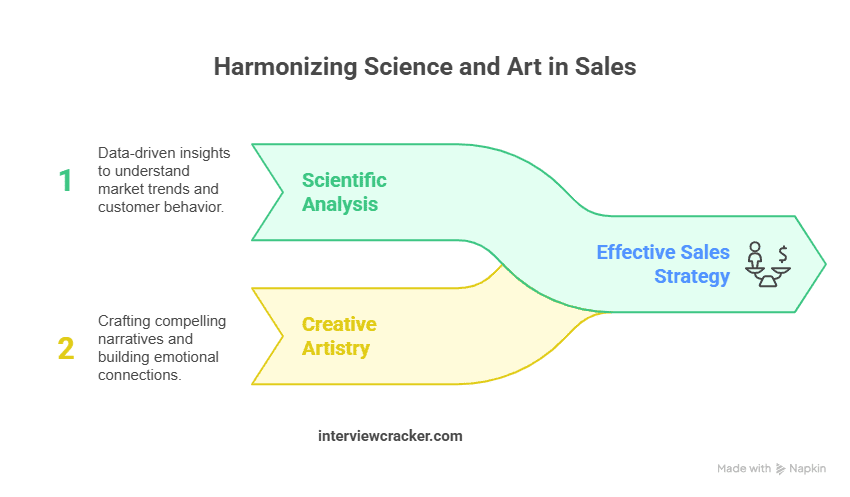
Convincing people to buy is both a science and an art. It’s a science because it involves understanding human psychology, studying market trends, and applying proven sales techniques. It’s an art because it requires creativity, intuition, and the ability to connect with people on an emotional level.
In this article, we will explore 21 effective techniques that can help you master the art of persuasion and close deals with confidence. Here, we’ll explore these foolproof ways to convince people to buy your product or service. These strategies are derived from the experiences of successful businesses and sales professionals across various sectors.
21 Ways to Convince a Customer to Buy Your Product
People buy when three things line up: they feel a real need, they trust you to solve it, and the risk of saying yes feels smaller than the cost of doing nothing. Every technique below strengthens one of those three. Jump to any of them:
1. Understand customer needs
2. Highlight the Benefits, Not Just Features
3. Build trust and credibility
4. Full Disclosure: Keep the Customer Informed
5. Speak Simply and Avoid Jargon
6. Showcase Your Unique Selling Proposition (USP)
7. Leverage the Power of FOMO (Fear of Missing Out)
8. Create a Sense of Urgency But Don’t Rush The Process
9. Provide Options, But Not Too Many
10. Provide demonstrations or samples
11. Use persuasive storytelling
12. Leverage Customer Reviews and Testimonials
13. Target a Specific Audience
14. Create Engaging Content Around Your Product
15. Focus on Branding
16. Provide excellent customer service
17. Offer social proof
18. Offer guarantees or warranties
19. Personalize your approach
20. Anticipate Objection
21. Follow up and maintain relationships
1. Understand Customer Needs
Take the time to understand your customers’ wants, needs, and pain points. This will help you tailor your approach to address their specific concerns effectively.
One major thing that can turn off a prospect is being pushy without understanding their need clearly.
Rather tell them how they can use the product to solve their problem, keep their concern first, and give your products and services as a solution to their problems. This way you can, show the prospect the value of your product and service without coming off as pushy and annoying.
If you are selling expense and reporting software for small businesses and they struggle with how manual and continuous logging their expenses can become lethargic. So, this is where your product comes in, the automated features of your software, and the time-saving capacity of your product or service. You need to be prepared for how to close the deal.
2. Highlight the Benefits , Not Just Features
Instead of focusing solely on your product’s features, emphasize the benefits it can provide to customers. For example, instead of stating that your laptop has a powerful processor, explain how it can help users work more efficiently and swiftly. This approach shows customers how your product can make their lives better, making it more convincing.
3. Build Trust and Credibility
Establishing trust is crucial. Provide clear and accurate information about your product or service, offer testimonials or case studies, and demonstrate your expertise in the industry. Trust lays the foundation for successful persuasion. Once you start finding answer for how to convince a customer to stay with you, you will get how to build trust and credibility with the customer.
4. Keep The Customer Informed
Transparency is key when trying to convince people to buy. Ensure that your customers have all the necessary information about your product, including its features, price, delivery charges, terms and conditions, and return policy. This approach builds trust and makes your customers feel valued and respected.
5. Speak Simple and Avoid Jargon

While it’s important to demonstrate your expertise and knowledge, avoid using industry jargon or complex language that might confuse your customers. Instead, use simple, clear language that your customers can understand easily. This makes your product more approachable and easier to sell.
6. Showcase Your Unique Selling Proposition (USP)
Your USP is what sets you apart from your competitors. It’s the unique feature or benefit that your product offers, which other products in the market don’t. Highlighting your USP can make your product more attractive and convincing to potential customers.
7. Leverage the Power of FOMO(Fear of Missing Out)
FOMO is a powerful psychological trigger that can be used to convince people to buy. Highlight the exclusivity of your product, the limited availability, or a special offer that’s about to end. This strategy can motivate customers to make a purchase before they miss out on a great deal.

8. Create a Sense of Urgency But Don't Rush The Process
No one is capable of making the right decision when they are in a hurry. We get it that you have targets to meet on regular basis, but your persuasion should feel natural to the prospect. No one should feel pressured or rushed to sign on the dotted line.
This doesn’t mean that you don’t give them a slight sense of urgency by attempting them with a special price or a freebie. Encourage customers to take action by creating a sense of urgency. Limited-time offers exclusive deals, or time-limited bonuses can motivate customers to make a purchase sooner rather than later. Towards the end, the only important thing is to be on the same page as a prospect. If you are going through a sales process assuming the prospect is ready to close when S/he is only in the consideration stage. Therefore, take your time
Implementing these tactics in your future calls to close deals, will make you feel more comfortable and confident. And this will help in making the transition from a lead to a customer. The walk into a sales conversation with your potential customer will be easy. The goal is to make your prospect feel that your offerings are the best solution for their needs.
9. Provide Options, But Not Too Many
Giving your customers options can make your product more appealing. However, providing too many options can overwhelm your customers and make it harder for them to make a decision. Striking a balance is key.
10. Provide Demonstration or Sample
Allow customers to experience your product or service firsthand. Offer free trials, product demonstrations, or samples to showcase its value and build confidence in its quality.
11. Use Persuasive Storytelling

Tell compelling stories that connect with your customers on an emotional level. Use narratives that highlight the benefits of your product or service and how it has positively impacted other customers’ lives.
This is what it boils down to:
Why should people choose you? To what extent do you stand out from the competition?
To increase sales, highlight what makes you different from the competition.
Suggested Read: Best Sales Pitch
12. Leverage Customer Reviews and Testimonials
Customer reviews and testimonials can be incredibly convincing. They provide social proof and reassure potential customers that your product is worth buying. Make sure to highlight positive reviews and testimonials in your marketing materials and on your website.
13. Target a Specific Audience
Instead of trying to appeal to everyone, focus on a specific target audience that’s likely to benefit the most from your product. Understanding your audience’s needs, preferences, and pain points can help you tailor your sales pitch and make it more convincing.
14. Create Engaging Content Around your Product
Creating engaging content around your product can help educate your customers, demonstrate the value of your product, and convince them to buy. This could be blog posts, videos, infographics, or social media posts.
Tools Sales Teams Use to Persuade and Convert
Good tools make these techniques repeatable. Most sales teams rely on a CRM (such as HubSpot, Salesforce or Zoho) to log every conversation and objection, email and call tracking to time follow-ups, proposal and e-signature tools to make saying yes easy, and review platforms to collect social proof. If you also hire sales staff, see our guides to skill-based hiring, the best ATS for staffing agencies and resume screening software.
15. Focus on Branding

Building a strong brand can make your product more recognizable, enhance its perceived value, and make it more convincing to potential customers. Invest in high-quality branding that reflects the quality and value of your product.
16. Provide Excellent Customer Service
Deliver exceptional customer service at every touch point. Respond promptly to inquiries, be helpful and friendly, and go the extra mile to meet customer expectations.
Use a concrete case study to illustrate the process of handling customer complaints. Inquire as to whether or if a customer had any reservations regarding a recent purchase and what they were. Most likely, they’ll give another perspective.
A customer’s doubts about purchasing your goods increase as their price rises. If your rivals do a better job of answering these concerns, customers will go with them instead of you.
17. Offer Social Proof
People are more likely to trust and purchase from businesses that have positive reviews, testimonials, or endorsements. Highlight customer success stories, showcase positive feedback, and leverage social media to demonstrate your brand’s popularity and to showcase the satisfaction and success of previous customers. Social proof is a powerful persuader.
18. Offer Guarantees or Warranties
Providing guarantees or warranties can reduce the perceived risk for customers. It shows your confidence in your product or service and gives customers peace of mind.
What is the very first thing that springs to mind when you hear the term “risk reversal?”
Most likely, there is a refund policy in place.
The majority of risk reversals take this form. And although it does reverse the odds in your favor, it’s hardly the best possible outcome.
After everything is said and done, people want more than just their money back. Simply following through on what you’ve promised is what they care about most. They really want is for you to grasp what dangers they are in.
19. Personalize Your Approach
Tailor your messages and offers to the individual customer. Use data and insights to provide personalized recommendations or exclusive offers based on their preferences and past purchases.
If you are looking to persuade a prospect to consider your product, try not to stick to your generic script, it makes you sound rehearsed, or the message that needs to reach does not go out. They might not find a piece of relevant information and whatever you say will not make an impact and persuade the prospect to buy your product and service
This does not mean that you speak to them, that they are long-lost, friends. No, it just means that you need to adjust your message in such a way that your message must be relevant to what the prospect is interested in.
Customers are more likely to buy if you can establish a personal connection with them. Be natural and act like a human being.
If you are reading from scripts the prospect knows the vibe, that you are only interested in selling the products and services and not giving a solution.
A prospect will buy only when you can build a rapport with the customer. This bond is not formed if your message is not personalized.

20. Anticipate Objection
During the sales process, customers may raise objections or concerns. Anticipate these objections and prepare effective responses to address them. Listen actively to the customer’s concerns, empathize with their viewpoint, and provide thoughtful solutions or explanations. By proactively handling objections, you can alleviate doubts and reinforce the customer’s confidence in their decision to move forward.
Imagine this scenario: you’ve meticulously prepared for your sales call, understanding your prospect’s needs and wants inside out. Armed with your well-organized notes, you approach the conversation with confidence, ready to seal the deal. However, as the call unfolds, an unexpected curveball is thrown your way—a prospect poses a question you hadn’t anticipated or factored into your preparations.
It can be a nightmare, leaving you feeling unprepared and off balance. But fear not! Embrace this situation as a valuable opportunity for growth and learning. To enhance your ability to convince customers, it’s crucial to adopt a proactive approach.
21. Follow up and Maintain Relationships
Stay engaged with your customers even after they make a purchase. Follow up with them to ensure their satisfaction, offer additional support, and keep them informed about new products or services.
Remember, building long-term customer relationships is crucial, so focus on delivering value, addressing their needs, and providing exceptional experiences throughout their journey with your brand.

Allow Your Prospect to Make a Decision
Your end goal is to sell your product. Not because you pressured them to buy it but rather because they genuinely wanted to buy it.
To be honest, no one likes to be told what to do and what not, and this includes your prospects. To do this let the ball be in the prospect’s court. Please don’t try to convince or push a customer on a call. Depending on team size, sales cycle length, and customer geography, different persuasion and sales enablement tools work better for different businesses.
Avoid being too direct in your approach. All you got to do is, give them the context and give them information that shows that buying from you is the best option for them.
But yes, remember to remind your prospect that ultimately it is their decision and the purchase is truly their choice throughout the session.
What to Say: Scripts for Common Customer Objections
Most sales stall on the same four objections. These short scripts follow one pattern — acknowledge, ask, reframe around value, offer a low-risk next step.
“It’s too expensive.”
“I understand — it is an investment. Can I ask what you are comparing it with? … If it saves your team about five hours a week, it pays for itself in roughly two months. Would it help to start with the smaller plan and upgrade once you see the results?”
“I need to think about it.”
“Of course. So I can help, what is the one thing you are still unsure about — the price, the fit, or the timing? … If we can sort that out, would you be comfortable moving ahead this week?”
“We already use a competitor.”
“That makes sense — switching has a cost. What would you change about your current tool if you could? … That is exactly where we are different. Would a side-by-side trial with your own data be useful?”
“Send me some information.”
“Happy to. So I send the right thing rather than a brochure, which matters most to you — cost, results or support? I will send a one-page summary on that and call you on Thursday to answer questions. Does 11 am work?”
Why these work: each one asks a question before pitching, ties the product to the customer’s own priority, and ends with a specific, easy next step. Avoid fake urgency or invented discounts — they win a sale once and lose the customer’s trust.
How to Answer "Convince Me to Buy This Product" in an Interview
“How would you convince a customer to buy our product?” — or the classic “sell me this pen” — is one of the most common sales interview questions. The interviewer is not judging the pen. They want to see whether you ask questions before pitching, listen, and close.
A strong structure (about 60–90 seconds):
- Ask about the need: “When did you last use a pen? What were you writing? What frustrates you about the pens you use now?”
- Link the product to their answer: “You said you sign contracts with clients — this pen writes smoothly first time and looks professional in a meeting.”
- Handle a likely objection: “It costs a little more than a disposable pen, but one pen lasts years and refills are cheap.”
- Close: “Shall I put one in your bag today?”
Sample answer for “How would you convince a customer to buy our product?”
“I would start by understanding the customer rather than the product — asking what problem they are trying to solve, what they use today, and what a good result looks like for them. Then I would show how our product solves that specific problem, using a short demo or a relevant customer example as proof. If they raise a concern, such as price, I would address it directly by showing the value or return. Finally, I would make the next step easy — a trial, a pilot or a clear proposal — and agree a follow-up date. In my last role, this approach helped me [result, e.g. raise my conversion rate from 18% to 26%].”
Preparing for a sales interview? Practise with our list of sales interview questions and best answers and these sales pitch examples.
FAQs: Convincing Customers to Buy
How do you convince a customer to buy a product?
Understand the customer’s problem first, then show how your product solves it in their terms. Back it up with proof such as a demo, numbers or reviews, address their main objection honestly, and make the next step easy and low-risk with a trial, guarantee or clear price.
How do you convince a customer on a call?
Prepare beforehand, open with a question about their situation, listen more than you talk, connect one or two benefits to what they said, share a short proof point, and end by agreeing a specific next step and date.
How do you answer “how would you convince a customer” in an interview?
Show a process: ask questions to understand the need, match the product to that need, use proof such as a demo or case study, handle objections directly, make the next step easy and follow up. Finish with a real example and result from your own experience.
How do you convince a customer to buy an expensive product?
Shift the conversation from price to value. Show the bigger problem it solves, the long-term savings or return, and what makes it more reliable or better supported than cheaper options. Use customer results as proof and offer ways to lower the risk, such as a guarantee, pilot or payment plan.
How do you persuade a customer who says “I need to think about it”?
Ask what they are still unsure about — price, fit or timing — and address that specific concern. Then agree a clear next step, such as a follow-up call on a set day, rather than leaving it open.
How do you convince a customer to make a payment?
Stay polite and professional, remind them of the work delivered and the value they received, make paying easy with a clear invoice and payment options, and explain any practical consequence of delay, such as paused service, without sounding threatening.
Conclusion
You might feel more at ease and confident while making sales calls if you use these strategies. Additionally, this will facilitate the process of converting a lead into a customer. Persuading customers to close a deal requires a combination of understanding their needs, effective communication, building trust, and addressing objections. Even if every customer doesn’t convert immediately, building resilience in your sales approach ensures you stay confident, adapt to feedback, and keep improving your strategy.
By employing these strategies, you can enhance your persuasive abilities and increase your success rate in closing deals. Remember, genuine empathy, transparent communication, and a focus on delivering value are the keys to becoming a master persuader.
Recent Posts

Himani Joshi
Himani Joshi is a Senior Business Manager at Interview Cracker, working at the intersection of careers, hiring, and skill development. She writes about interview strategy, job market trends, and professional growth, helping readers turn opportunities into outcomes. She also writes for HR and hiring professionals, offering insights on recruitment, talent strategy, and evolving workplace dynamics.
Free tools from Interview Cracker
Planning your next career move? Try these free tools