Global payroll operations are increasingly complex due to regulatory diversity, multi-currency processing, and compliance requirements across jurisdictions. Modern HR leaders and finance teams rely on advanced payroll software solutions to streamline international payroll, reduce administrative risk, and maintain compliance across global markets. This guide reviews the strategic value of global payroll platforms, key features to evaluate, and how to align payroll technology with enterprise goals.
Let’s dive into the top platforms that combine automation, compliance, and affordability.
For UK businesses, this guide also covers HMRC-recognised domestic payroll platforms, Sage, Xero, Moorepay, and BrightPay, alongside the global compliance requirements specific to British, Canadian, and European payroll operations.
Table of Contents
ToggleWhy Enterprise HR Teams Need Global Payroll Software
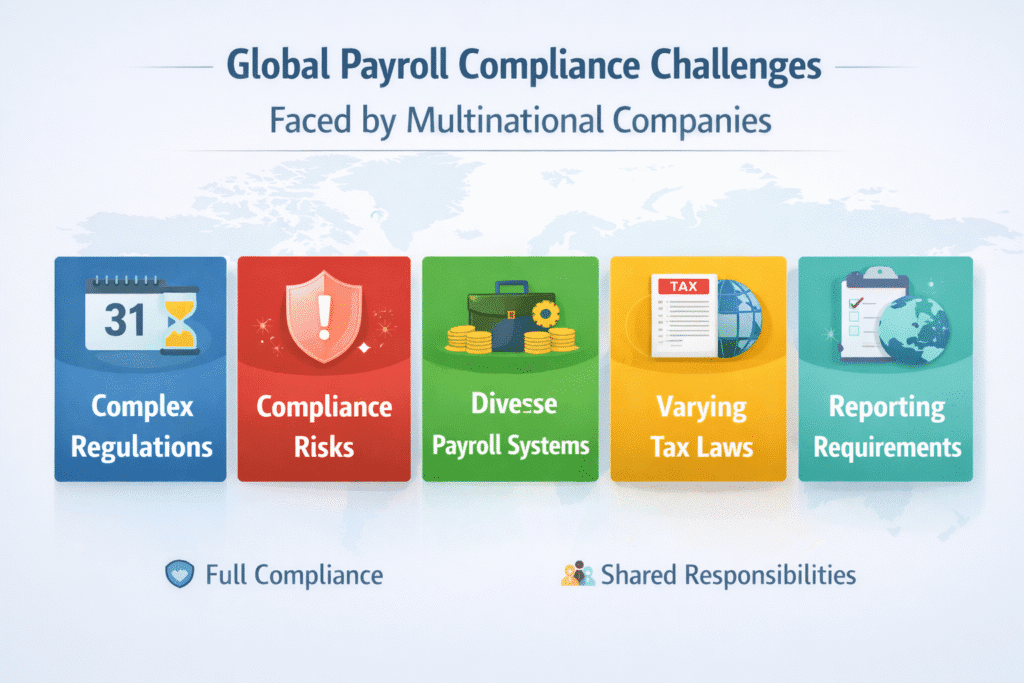
Global payroll solutions centralize payroll processing across multiple countries, automate tax and benefit calculations, and ensure compliance with local labor laws and reporting standards. Without a unified payroll system, manual processes lead to errors, compliance penalties, and inefficiencies that drain HR and finance resources. Robust platforms provide consistency, reduce risk, and support workforce scalability as organizations expand internationally.
Tier 1 countries have intricate labor laws, tax regulations, and reporting requirements. For example:
The U.S. requires adherence to IRS guidelines, state-specific taxes, and benefits like 401(k) deductions.
The U.K. enforces Real Time Information (RTI) reporting and auto-enrollment pensions.
Germany mandates meticulous payroll tax (Lohnsteuer) calculations and social security contributions.
Payroll software for small business and enterprise teams simplifies these processes by automating calculations, generating compliance reports, and integrating with HR tools. Many providers also offer trial payroll software periods, allowing businesses to test features risk-free.
According to global payroll management guides, accurate and compliant payroll across countries is essential to sustain employee trust and financial precision.
Essential Features of High-Impact Payroll Software
Businesses should evaluate solutions based on strategic capabilities, such as:
Multi-Country Compliance: Automatic updates for tax laws and statutory reporting in every country of operation.
Scalability: Grows with your business, from startups to multinational corporations.
User-Friendly Interface: Reduces training time for HR teams.
Integration: Syncs with accounting software (QuickBooks, Xero), HRIS, and time-tracking tools.
Cost-Effective Plans: Look for free payroll software for small business tiers or affordable subscriptions.
Automation: Automated wage calculations, currency conversions, and payment workflows.
Security & Data Governance: Strong encryption, role-based access, and data localization compliance.
Leading Global Payroll Software Platforms
Below are strategic payroll platforms used by HR and finance leaders
Deel
Best for: global workforce payroll and contractor management. Handles payroll and compliance in 150+ countries with advanced automation and reporting capabilities.
Key Features:
Payroll automation in 150+ countries.
Compliance with local tax laws and contracts.
Why It Stands Out: Deel’s intuitive platform handles international contractors and employees seamlessly, making it a top contender for payroll software for small business scaling globally.
ADP Workforce Now
Best for: Enterprise-grade payroll, tax filing, and benefits integration with deep HR analytics. Widely used in the US and Canada for complex payroll operations.
Key Features:
Robust tax filing and benefits administration.
AI-driven analytics for payroll forecasting.
Why It Stands Out: ADP’s decades of experience make it a trusted best global payroll software for large teams needing advanced HR tools.
Rippling
Best for: Unified HR and payroll platform that syncs employee data across systems and supports rapid scaling.
Key Features:
Unified payroll, IT, and HR platform.
Manages global teams in minutes.
Why It Stands Out: Rippling’s automation reduces administrative work by 90%, ideal for fast-growing companies.
Papaya Global
Best for: Enterprises with 1,000+ employees. Global payroll engine with real-time compliance updates and workforce insights for mid-to-large enterprises.
Key Features:
End-to-end payroll in 160+ countries.
Real-time compliance updates.
Why It Stands Out: Papaya Global’s AI-powered platform ensures accuracy for large-scale operations.
Remote
Best for: Compliance-heavy industries. Comprehensive payroll + compliance + contractor platform targeting distributed teams globally.
Key Features:
Handles payroll, taxes, and benefits in 50+ countries.
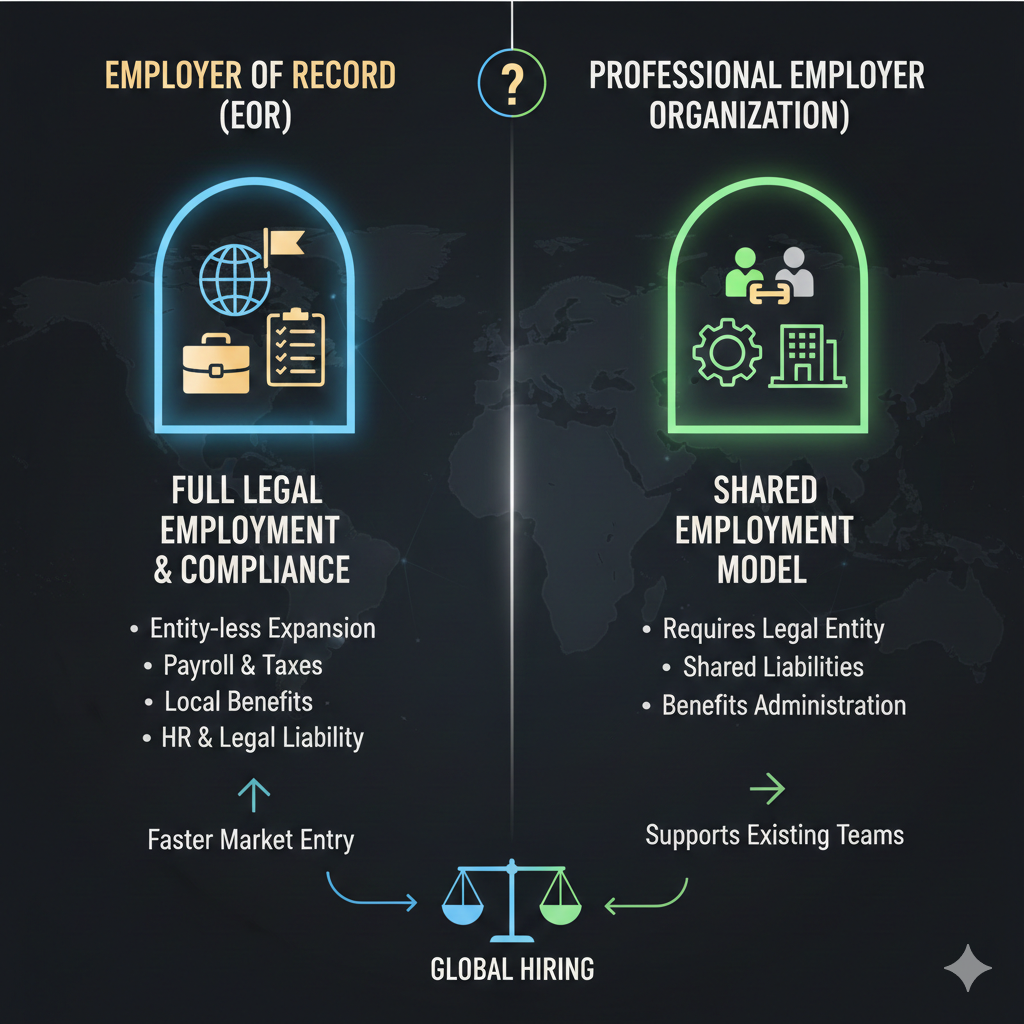
Employer of Record (EOR) services.
Why It Stands Out: Remote ensures legal compliance, even in strict jurisdictions like Germany.
Oyster HR
Best for: Distributed teams. Automates payroll for global teams with integrated benefits and compliance features.
Key Features:
Automated payroll for 180+ countries.
Employee benefits and equity management.
Why It Stands Out: Oyster’s focus on remote work makes it a best global payroll software for hybrid teams.
UK Payroll Software: HMRC-Recognised Platforms for British Businesses
While global platforms like Deel and Rippling serve multinational workforces, the majority of UK businesses — particularly SMEs, accountancy practices, and payroll bureaux — rely on UK-specific payroll software built around HMRC’s Real Time Information (RTI) system, PAYE compliance, and auto-enrolment obligations. The following platforms are all HMRC-recognised and widely used across UK businesses of varying sizes.
What is RTI and why does it matter? Real Time Information (RTI) requires all UK employers to submit payroll data to HMRC on or before every payday via a Full Payment Submission (FPS). Late or incorrect RTI submissions trigger automatic HMRC penalties starting at £100 per month. Any payroll software used by a UK employer must be HMRC-recognised and capable of submitting RTI returns directly to HMRC’s systems.
Sage Payroll UK
Sage is the market-leading payroll software for UK small and medium businesses, used by over 100,000 UK employers. Sage Payroll handles PAYE calculations, National Insurance (NI) contributions, RTI submissions, statutory payments (SSP, SMP, SPP, ShPP), student loan deductions, and pension auto-enrolment through direct integration with UK pension providers including Nest, The People’s Pension, and NOW: Pensions.
Key UK compliance features: Full RTI submissions (FPS and EPS), National Minimum Wage and National Living Wage compliance checks, P60 and P11D generation, CIS (Construction Industry Scheme) support, IR35 off-payroll working support, and direct BACS payroll payment integration.
Sage Payroll is available standalone or as part of Sage 50 Accounts. Pricing starts from approximately £8/month for up to 5 employees. Best for UK SMEs, accountants running client payrolls, and businesses needing deep HMRC integration.
Xero Payroll UK
Xero Payroll is built into the Xero accounting platform and is the preferred payroll solution for UK businesses already using Xero for bookkeeping and VAT returns. Payroll data flows directly into Xero’s general ledger, eliminating manual journal entries. Xero Payroll handles RTI submissions, PAYE, National Insurance, auto-enrolment, and all statutory payments. Included in Xero’s Premium and Ultimate plans at no additional cost — making it effectively the lowest-cost HMRC-compliant payroll option for existing Xero customers.
Best for: UK small businesses and sole traders on Xero, accountants managing client payroll within a single platform.
Moorepay
Moorepay is a specialist UK payroll and HR platform used by over 10,000 UK employers, particularly in the mid-market (50–1,000 employees). As part of the NGA Human Resources group, Moorepay offers both self-service software and fully managed payroll bureau services — suitable for businesses wanting either in-house processing or full payroll outsourcing to UK-based payroll specialists.
Key compliance features: Full RTI compliance, comprehensive auto-enrolment management including Pensions Regulator declaration of compliance, gender pay gap reporting, National Minimum Wage audit tools, IR35 compliance support, and GDPR-compliant payroll data management.
Particularly strong for UK businesses in retail, hospitality, manufacturing, and care sectors with complex shift patterns and variable pay. Best for UK mid-market businesses (50–1,000 employees) wanting bureau support alongside software.
BrightPay UK
BrightPay is a CIPP (Chartered Institute of Payroll Professionals) award-winning UK payroll software, particularly popular with UK accountancy practices and payroll bureaux managing multiple client payrolls. Licensed per tax year rather than monthly subscription — cost-effective for bureaux running annual payrolls.
Key compliance features: Automated RTI and CIS returns, auto-enrolment with direct pension provider integrations, annual payroll journal exports to Xero, Sage, QuickBooks and FreeAgent, BrightPay Connect cloud backup and employee self-service portal, and full statutory payment calculators for SSP, SMP, SPP, SAP, and ShPP.
Best for: UK accountancy practices, payroll bureaux, and small businesses wanting CIPP-recognised software quality.
UK Payroll Compliance Requirements for 2026
HR and finance leaders managing UK payroll — whether using domestic software or a global platform — must ensure the following statutory obligations are met:
PAYE and RTI: All UK employers must operate PAYE and submit RTI data to HMRC on or before each payday. A Full Payment Submission (FPS) is required for every pay run. Penalties for late submissions start at £100 per month for small employers.
National Insurance: Employers pay Class 1 secondary NI on employee earnings above the Secondary Threshold (£9,100/year in 2025/26) at 13.8%. Payroll software must calculate both employer and employee NI contributions and report via RTI.
Auto-Enrolment: All UK employers must automatically enrol eligible workers (aged 22–State Pension Age, earning above £10,000/year) into a qualifying workplace pension. Minimum contributions are 3% employer and 5% employee (8% total) of qualifying earnings. Employers must re-enrol opted-out workers every three years and maintain a Declaration of Compliance with The Pensions Regulator.
National Living Wage: The NLW applies to all workers aged 21 and over, with rates increasing each April. Payroll software must flag NLW and NMW compliance risks automatically. Non-compliance triggers HMRC enforcement and public naming.
Statutory Payments: UK employers must pay Statutory Sick Pay (SSP), Statutory Maternity Pay (SMP), Statutory Paternity Pay (SPP), Shared Parental Pay (ShPP), and Statutory Adoption Pay (SAP) at HMRC-prescribed rates. Small employers can reclaim these costs via EPS submissions to HMRC.
P60 and P11D: P60 certificates must be issued to all employees by 31 May each year. P11D forms reporting expenses and benefits in kind must be submitted to HMRC by 6 July annually.
UK employers managing salary sacrifice schemes, pension contributions, electric vehicle leasing, or cycle to work, can calculate the exact Income Tax and National Insurance savings for their employees using our freeUK Salary Sacrifice Calculator.
Canadian Payroll Software: Key Platforms and Compliance Requirements
Canadian payroll compliance is governed federally by the Canada Revenue Agency (CRA) for income tax, Canada Pension Plan (CPP) contributions, and Employment Insurance (EI) premiums — plus provincial employment standards that vary by province. Quebec employers have additional obligations to Revenu Québec including QPP (Quebec Pension Plan) and QPIP (Quebec Parental Insurance Plan) contributions.
Dayforce (Ceridian)
Dayforce by Ceridian is the market-leading enterprise HR and payroll platform for Canadian employers, processing payroll for some of Canada’s largest organisations across retail, healthcare, manufacturing, and financial services. Dayforce handles federal CRA remittances, provincial income tax across all 13 provinces and territories, CPP contributions, EI premiums, T4 year-end processing, and Quebec-specific QPP and QPIP calculations. Best for Canadian mid-market and enterprise organisations (200+ employees) and multi-province employers.
ADP Canada
ADP Canada serves businesses of all sizes with dedicated Canadian compliance support, CRA remittance processing, and direct integration with major Canadian banks. ADP Canada handles Records of Employment (ROE) filing with Service Canada — mandatory when an employee’s earnings are interrupted — and supports Quebec payroll compliance including Revenu Québec remittances. Best for Canadian businesses of all sizes wanting an established provider with deep CRA compliance expertise.
Wagepoint
Wagepoint is a Canadian-built payroll platform designed specifically for small Canadian businesses (1–100 employees). It handles all CRA remittances, T4 preparation, ROE filing, and direct deposit. Wagepoint’s straightforward interface and Canadian-focused support make it the preferred choice for Canadian startups and small businesses. Best for Canadian small businesses wanting a purpose-built domestic solution.
Payworks
Payworks is a Canadian payroll and HR platform with strong SME market penetration, particularly in Western Canada. Handles full CRA payroll compliance, ROE filing, T4 preparation, and provincial remittances across all Canadian jurisdictions. Widely used by Canadian franchise operators, retailers, and hospitality businesses managing variable-hours workforces.
UK bookkeepers and Full Charge Bookkeepers evaluating accounting platforms should also read our Full Charge Bookkeeper Job Description which covers Xero, Sage, and QuickBooks requirements by country including UK MTD compliance and Australian BAS Agent considerations.
How to Evaluate Payroll Solutions for Your Organization
When choosing a payroll solution, HR leaders should assess:
✔ Regulatory Coverage: Does it support all countries you operate in?
✔ System Integration: How well does it connect to HRIS, ERP, or financial systems?
✔ Analytics & Reporting: Can it produce real-time insights for compliance and finance?
✔ Vendor Support: Quality of implementation assistance and ongoing updates.
✔ Security & Data Privacy: GDPR, SOC 2, and local data residency compliance.
For broader career and strategic context on payroll and HR leadership, refer to our career growth roadmap.
Strategic Benefits of Centralizing Payroll Technology
Centralized payroll systems improve organizational control by reducing redundancy, ensuring data consistency, and empowering HR leaders with workforce insights that support strategic decision-making. Automation minimizes manual errors and frees HR and finance teams to focus on high-value activities such as compensation planning and compliance governance
Alongside payroll compliance, UK businesses managing trade credit need a structured credit control function. Our “UK Credit Controller job description” explains the regulatory framework including the Late Payment Act, FCA CONC requirements, and credit insurance obligations.
Evaluating Payroll Software Based on Organizational Needs
Choosing a payroll solution should be based on organizational complexity, geographic footprint, and compliance requirements rather than price alone. Global organizations prioritize reliability, regulatory coverage, system integration, and data security when evaluating payroll platforms.
As workforce scale and cross-border operations increase, the value of centralized, compliant payroll systems far outweighs short-term cost considerations. HR leaders should assess long-term operational impact, risk reduction, and scalability when selecting payroll technology.
Tools & Resources for HR Leaders
Workday Global Payroll — Enterprise HR & payroll suite
Oracle Cloud HCM — Integrated HR, talent, and payroll platform
Personio — European HR & payroll platform with automation features
Ramco Global Payroll — AI-driven payroll automation solution
Final Thoughts
Investing in the best global payroll software saves time, reduces errors, and ensures compliance across tier 1 countries. Platforms like Deel and Gusto lead the pack for small businesses, while ADP and Papaya Global cater to enterprises. Don’t forget to leverage trial payroll software offers to find your perfect fit.
Pro Tip: Pair your payroll software with HR tools like BambooHR or Slack for maximum efficiency.
By prioritizing scalability, compliance, and user experience, your business can master global payroll—without the headaches.
Frequently Asked Questions (FAQs)
Can global payroll software manage compliance across multiple countries?
Yes. Modern global payroll software is designed to handle country-specific tax regulations, statutory filings, and labor law requirements across jurisdictions. These platforms centralize compliance workflows, automatically apply regulatory updates, and reduce the risk of errors when managing payroll for distributed and international teams.
How does payroll software support tax compliance for remote and hybrid workforces?
Payroll software automates tax calculations based on employee location, employment type, and local regulations. For organizations with remote teams, this ensures accurate withholding, reporting, and statutory contributions without relying on manual processes. Automation is especially valuable for companies operating across multiple states or countries.
Can payroll platforms handle region-specific statutory reporting requirements?
Yes. Enterprise payroll platforms are built to support region-specific reporting frameworks such as real-time tax submissions, social security contributions, and government filings. These systems generate and submit required reports in line with local regulations, helping organizations maintain audit readiness and regulatory alignment.
How do global payroll systems manage complex deductions and benefits?
Global payroll solutions are configured to handle mandatory deductions, pension contributions, and statutory benefits based on regional requirements. This includes managing variations in social security, parental benefits, retirement plans, and insurance contributions while maintaining consistent payroll records across regions.
Is global payroll software suitable for large and growing organizations?
Global payroll software is particularly valuable for mid-to-large organizations and companies expanding internationally. Centralized platforms improve scalability, reduce operational complexity, and provide visibility into payroll costs, compliance status, and workforce data across locations.
What should HR leaders evaluate when choosing a global payroll solution?
HR leaders should assess regulatory coverage, system integration with HRIS and finance platforms, reporting capabilities, data security standards, and vendor support. The right payroll solution should align with organizational size, geographic footprint, and long-term workforce strategy rather than focusing solely on short-term cost considerations.
How does payroll software improve risk management and governance?
By standardizing payroll processes and automating compliance checks, payroll software reduces the likelihood of regulatory violations and financial discrepancies. Centralized data, audit trails, and role-based access controls strengthen governance and support internal and external audits.
Partner With Interview Cracker
Interview Cracker publishes in-depth content on global payroll operations, statutory compliance, workforce governance, and HR technology infrastructure for organizations managing international teams.
Our audience includes payroll professionals, HR leaders, finance teams, and decision makers researching payroll systems and compliance frameworks across global markets.
We collaborate with:
Global payroll software providers
HRIS and workforce technology platforms
Payroll compliance and reporting solution providers
Partnership formats include contextual placements, sponsored educational content, and strategic collaborations aligned with enterprise payroll and HR operations.
📩 To explore partnerships or sponsored placements, contact
knowledge@interviewcracker.com

Himani Joshi
Himani Joshi is a Senior Business Manager at Interview Cracker, working at the intersection of careers, hiring, and skill development. She writes about interview strategy, job market trends, and professional growth, helping readers turn opportunities into outcomes. She also writes for HR and hiring professionals, offering insights on recruitment, talent strategy, and evolving workplace dynamics.